

Sheet 05.2049
Shure · Microphones
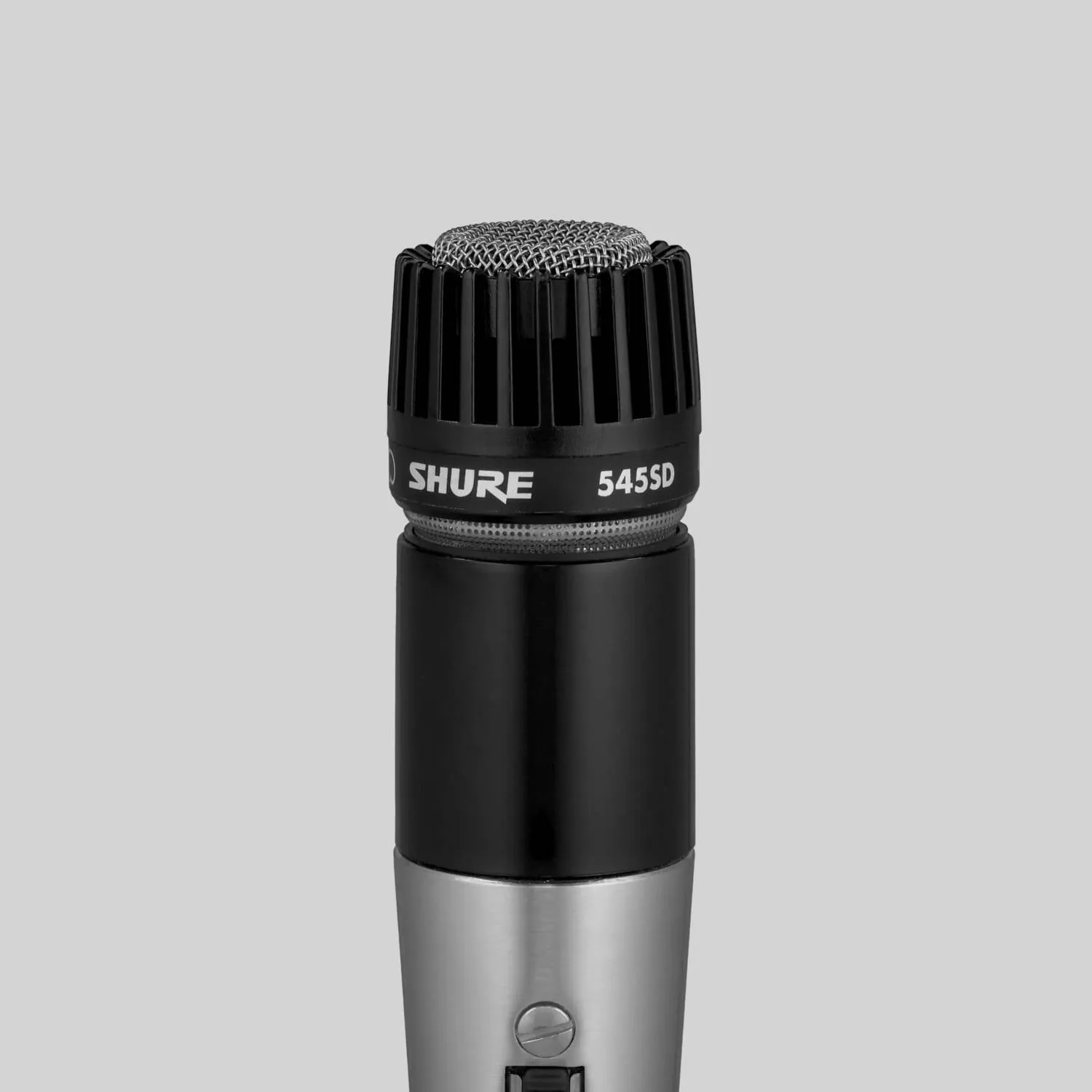
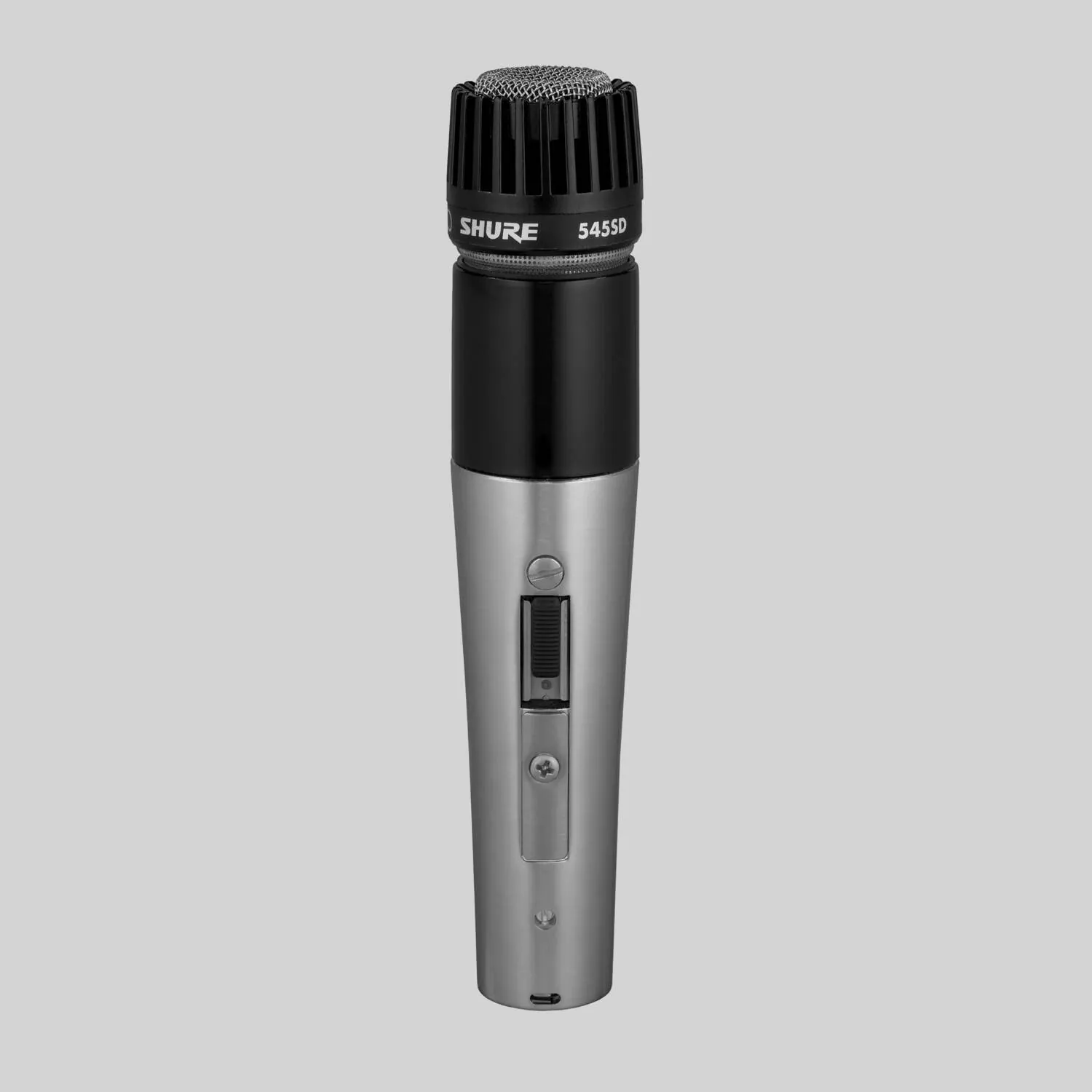
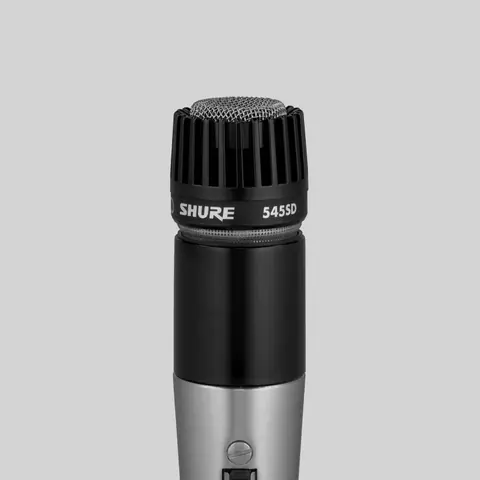
545SD
Model545SD-LC
Instrument microphone delivers an exceptionally uniform cardioid pattern to minimize feedback. It features a silent magnetic reed on and off switch with lock-on option and selectable dual-impedance operation.
545SDPrice on request Request a quotation
01VideoManufacturer's video on YouTube
Shure 545SD: the manufacturer's video
02SpecificationManufacturer's data · 4 groups · 8 values
What this product is, in numbers.
The manufacturer's published values. We confirm the configuration and the values that matter for your project before an order.
01Audio5
- Sensitivity
- Low: -58.00, High: -35.00 dBV/Pa – High: 17.60, Low: 1.30 mV/Pa
- Frequency response
- 50 Hz – 15 kHz
- Polar pattern
- Cardioid
- Transducer type
- Dynamic
- Impedance
- 100
02Control and interfaces1
- Connectors
- 3 Pin XLR
03Physical1
- Weight
- 255 g
04Packaging1
- In the box
- 1 × A25D Microphone Clip
Show the full specificationHide the rest of the specification0 more groups · 0 values
03Models1 models in the family
Models compared.
| Manufacturer order code | 545SD-LC |
|---|---|
| Configuration | Dynamic Microphone, Cardioid, Grey, 3-pin XLR Connector, No Cable included |
| In the box | 1 × A25D Microphone Clip |
04DescriptionManufacturer's description
What it is.
- Exceptionally uniform cardioid pattern minimizes feedback
- Selectable dual-impedance operation
- Silent magnetic reed on/off switch with lock option
Cardioid dynamic
Frequency response: 50 to 15,000 Hz
Shipped connected for low-impedance operation, the 545SD features a silent magnetic reed on/off switch with lock-on option. A favorite for instrument pickup and recording, the 545SD can also be used on lecterns in public address systems.
What polar pattern does the 545SD have?
The 545SD Classic Unidyne® Instrument Microphone is a dual-impedance, unidirectional, dynamic microphone.
05Related products
In the same range.
06Talk to us
 545SDShure · EQ-2049
Need this priced for your project?
- Quantity and site
- Configuration and interfaces
- Quotation